Running a Shopify store often involves more than simply accepting an order and sending it to the warehouse. When you are selling high-quality outdoor gear or specialized equipment, every order represents more than just a transaction; it represents a commitment of inventory and a logistical chain that begins moving the moment the “Buy” button is clicked.
Some orders, however, require a closer look. This is especially true when Shopify identifies them as having a medium or high fraud risk. In the early days of a business, you might catch these by manually glancing at every notification. But as you scale, or as you spend more time away from the screen exploring the White Mountains or planning family traditions, relying on manual checks becomes a liability.
I found that Shopify Flow makes it possible to automate these complicated operational decisions without relying on staff to catch every order manually. It provides a level of security that allows me to focus on growth and family, knowing that the “back office” is handling the heavy lifting.
The Problem: The High Cost of a “Standard” Fulfillment Process
By default, a suspicious order can move through the same fulfillment process as any other order. This is the primary danger for any e-commerce entrepreneur. If an order reaches a warehouse or a dropship supplier before someone reviews the risk analysis, the product may already be packed and shipped by the time the fraud risk is noticed.
For expensive products like the ones we often feature or sell, that can lead to significant losses. You aren’t just losing the inventory; you are dealing with chargebacks, lost shipping costs, and the administrative headache of trying to intercept a package already in transit. It is a reactive way to run a business, and I wanted something proactive.

Designing a Better Workflow
My goal was to create a safety net that worked while I was asleep or out in the field. I wanted a process that would automatically achieve several things:
- Identify medium- and high-risk orders instantly.
- Prevent payment from being captured until a human looks at it.
- Place fulfillment on hold so the warehouse doesn’t ship it.
- Clearly tag the order for easy review in the Shopify admin.
- Send me an immediate email notification.
- Automatically capture payment for orders that do not require review, keeping the cash flow moving for safe transactions.
The Shopify Flow Breakdown
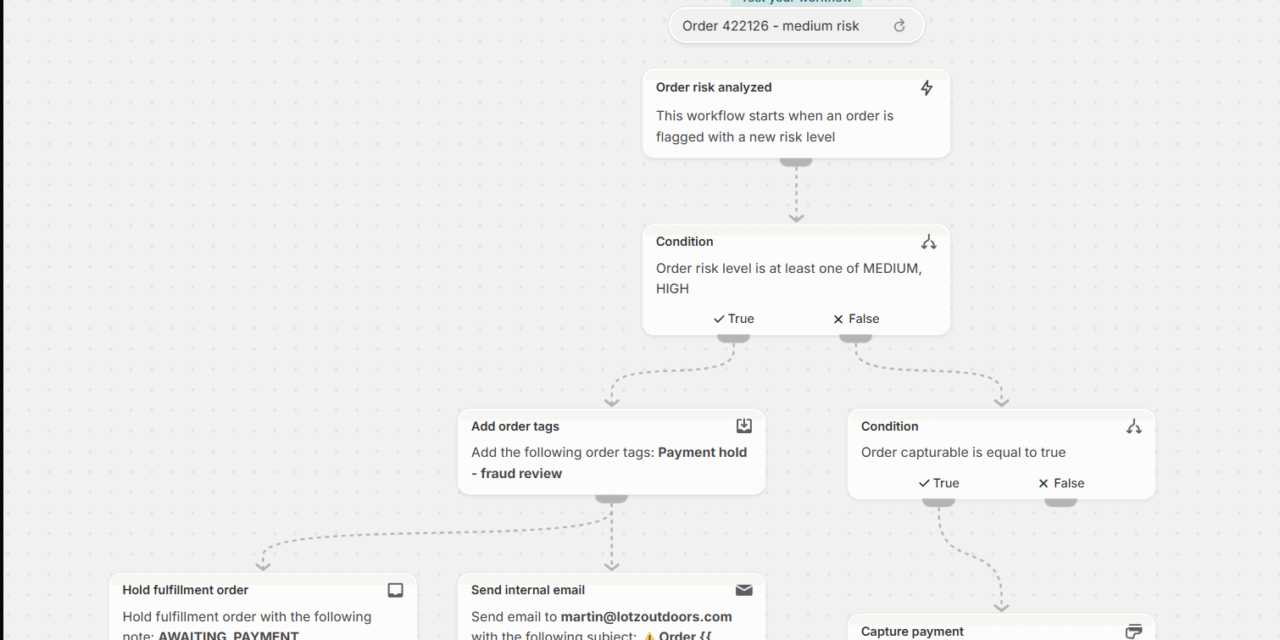
The logic for this workflow is straightforward but incredibly powerful. The process begins not when the order is created, but when Shopify completes its fraud analysis and assigns the order a risk level. This is a critical distinction because the risk level is the data point that drives the entire automation.
Handling High and Medium Risk
The first condition in the flow checks whether the order has been classified as either medium risk or high risk. When that condition is true, Shopify Flow performs three specific actions:
1. Tag the order
The workflow adds a specific order tag: Payment hold - fraud review. This makes the order instantly recognizable. It allows the order to be included in saved searches and reports, making it impossible for a suspicious transaction to hide among the hundreds of legitimate ones.
2. Hold fulfillment
This is the most important safeguard. The fulfillment order is automatically placed on hold with a specific note: AWAITING_PAYMENT. This is especially important when orders are automatically transmitted to a warehouse, fulfillment partner, or supplier. The hold acts as a physical stop-gap, preventing the order from being shipped before the review is complete.
3. Send an internal email
Instead of me having to regularly check the Shopify dashboard for red flags, the workflow sends me an email containing the order number and the specific fraud risk level. It moves the information to where I am, rather than making me go looking for it.

What Happens to Low-Risk Orders?
Automation shouldn’t just create hurdles; it should also remove them. For the vast majority of orders that are classified as low risk, I want the process to be as fast as possible.
When the order is not classified as medium or high risk, the workflow moves to a second check: is the payment still capturable? If it is, Shopify automatically captures the payment and allows the order to continue through the normal fulfillment process.
This creates two very clear, automated paths:
- Normal orders: Payment is captured and fulfillment continues without any human intervention.
- Potentially fraudulent orders: Payment capture is withheld, fulfillment is paused, the order is tagged, and I am notified to take a look.
Why Shopify Flow is Essential for Growth
Shopify Flow is more than just a notification tool. It is a way to connect disparate pieces of information: order data, payment status, fraud analysis, inventory levels, and customer history. It allows you to turn your personal business rules into repeatable processes that operate consistently.
The real value here is not just about saving a few clicks in the dashboard. It is about preventing expensive mistakes that can hurt the bottom line. It improves response times and ensures that every single order follows the correct process, whether you are at your desk or hiking Mt. Carrigain in the White Mountains.
When you automate the “boring” but critical operational decisions, you free up mental space for the things that actually matter: pursuing your passions, innovating on new ideas, and spending quality time with family. It is about building a business that supports your life, rather than one that consumes it.
Reflection Questions for Your Store
- What is the “gut check” rule you use for every order that could be turned into an automated condition?
- How much time do you spend manually tagging or reviewing orders that could be handled by a flow?
- What would “peace of mind” look like for your fulfillment process?